Everything You Need to Know About Choosing a Pocket Knife
OR - A Pocket Knife Nerd’s Guide to Life, the Universe and Sharp
Looking for the best selection of pocket knives? Check out our sister store, Kent of Inglewood.
It’s no secret that I got quickly nicknamed the pocket knife nerd of Knifewear Toronto. This is due to my love for these awesome pocket tools- and perhaps a slightly larger than average collection. At 15 pocket knives and counting, one could hypothetically argue I have too many. I argue that everyone else simply doesn’t have enough of them.

I get asked all the time about handle materials vs. steels, what I use a pocket knife for, and what they are good for. How do you choose your pocket-friendly tool?
Let’s start with the nerdy part. STEEL! I don’t care what anyone says, comparing steels does in fact make you a nerd- but it makes you our kind of nerd, so relax, you’re in good company. Rockwell hardness is how we compare steels to each other; it’s a series of tests used to determine hardness. The higher the number, the harder the steel. The harder the steel the sharper it will be; it will stay that way longer, but it will be more brittle, so be prepared to be a bit gentler with it. Want something more rough and tumble? Go with a softer steel! If you’ve been hanging out around knifewear long enough, you have seen Kevin’s steel chart- so here’s a handy little chart from your local pocket knife nerd.

When choosing pocket knives, consider what you use them for. My Yu Kurosaki SG2 black leopard does not get used to trim branches, she trims pages out of my sketchbooks, yarn off my spinning wheel, threads off of clothes- she’s meant for the dreamier tasks in life, maybe cutting an apple as a snack in a pinch.
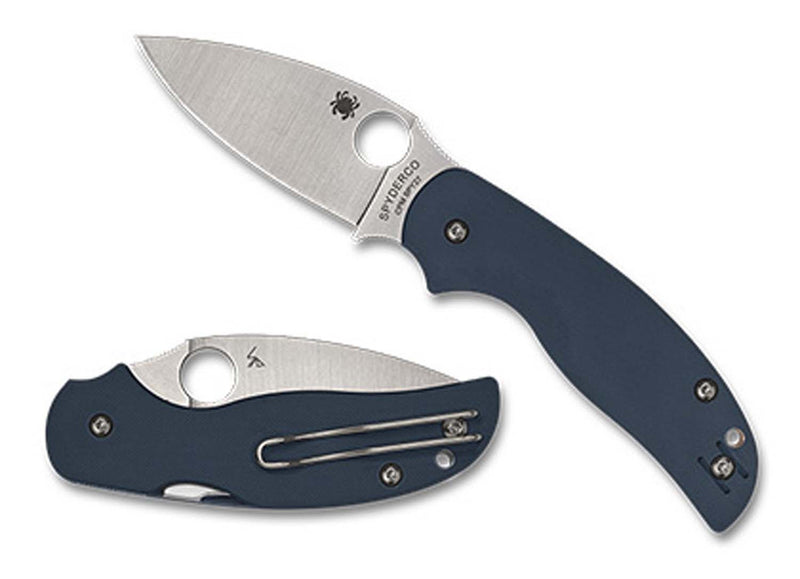
My WESN allman, on the other hand, made of a more rugged steel (CPMS35VN if you want to compare), tears down boxes for me at work, slices through rope, strips cables. That’s my ride or die knife. Spyderco is very well known for being the kind of knife you can rely on for this, too- made out of tough steel but hard enough that the edge retention makes you smile. (Just sneak by the Toronto store and ask Twigg how his is doing.)
Another consideration to make is carbon steel v.s. Stainless. Choose carbon steel if you want the personality of a patina (and are okay with something TLC dependent), but if you don’t want to risk rusting, stainless steel is your friend!
When I say TLC dependent, it means a couple of things: carbon steel must be kept dry when not in use. If left wet or covered in something, they can rust on you. If it’s really hard steel, cutting something really hard can chip your blade. If it has a wooden handle, you’ll want to wax it a few times a year to avoid cracks down the road.
Handle materials also change a lot; there are loads to consider when it comes to handles. Do you want more grip in wet conditions? If you’re camping, fishing, field dressing, etc. G10 is an awesome choice! It’s a high-pressure fibreglass laminate- fibreglass sheets, soaked in resin and then squished while heated. G10 gives you a surface that usually has texture carved into it for comfort and grip, but also won’t absorb water. Perfect for us outdoors people who want to grab and go.
Want something cool and sleek? Titanium handles have you covered. The James Brand Chapter 2 knives are an excellent example: pretty, sleek, and light enough for a comfortable daily carry. But my favourite part about titanium? The handles don’t get as cold as steel, so as you roll out of bed in the morning, ready to tuck your daily carry onto your belt, there's no cringe as a cold piece of metal hits your skin. Pretty sweet, right?
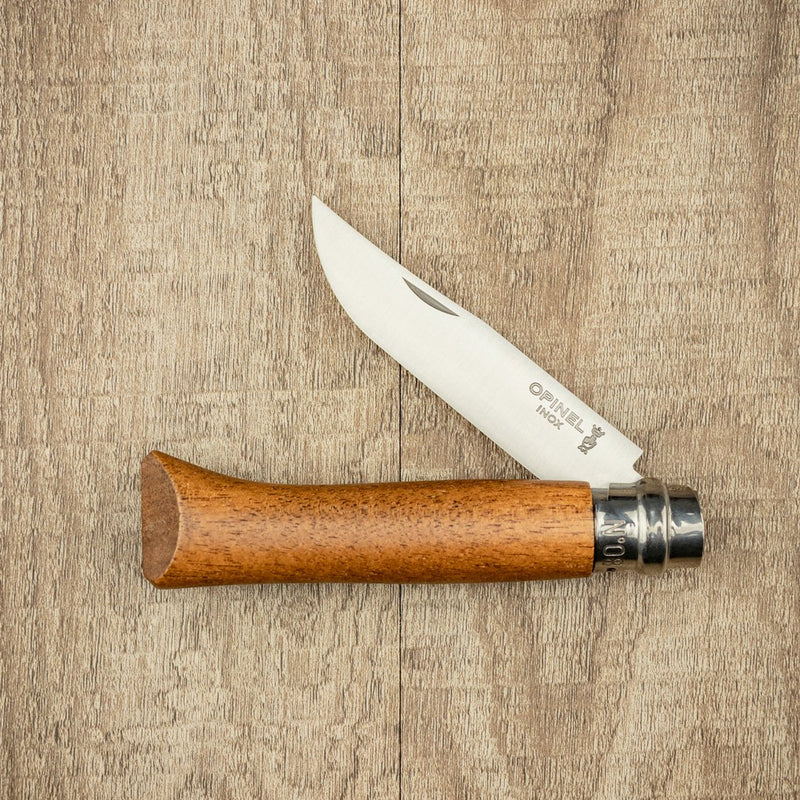
Wood handles give you a nod to the romantic side of tools, a vintage look that ages with you. It wears the scuffs and dark spots of your adventures with pride and shows a lifetime of use in a beautiful way. Wood handles also tend to be lighter to have in your pockets, especially those like the Opinel knives.
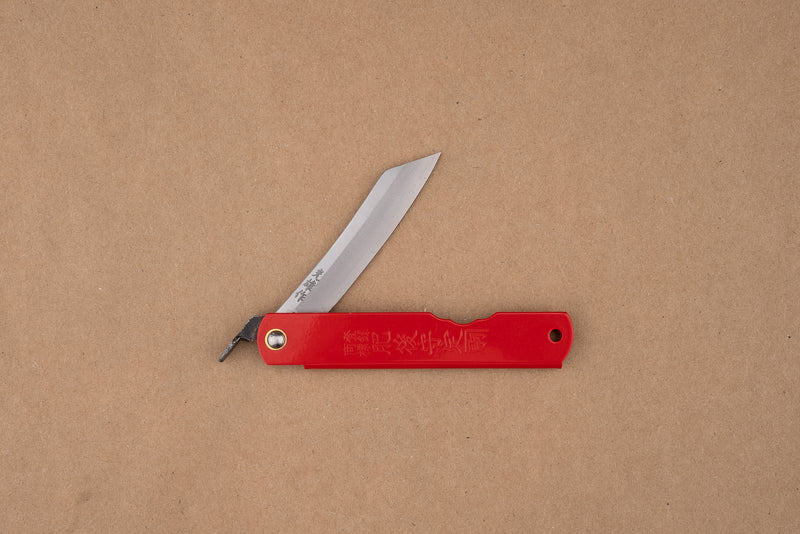
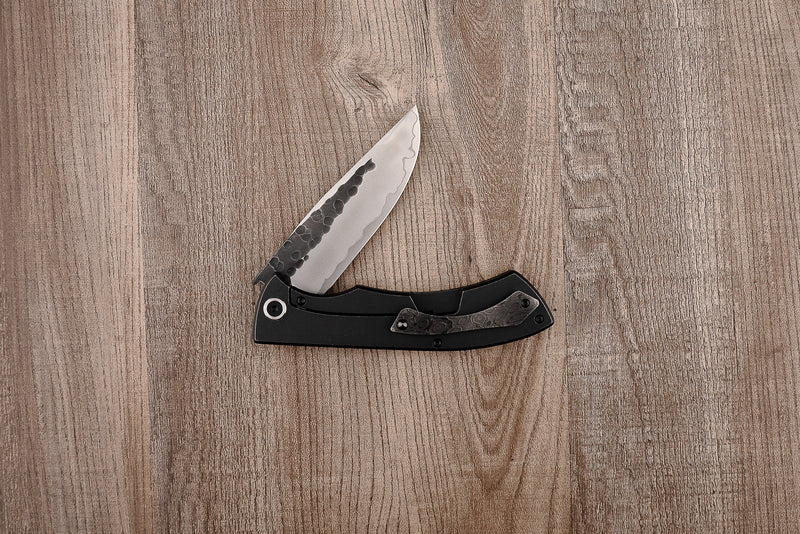
Here are a few of my favourite pocket knives at the moment: